
Why Reconnect?
It is not too late for the forgotten generation

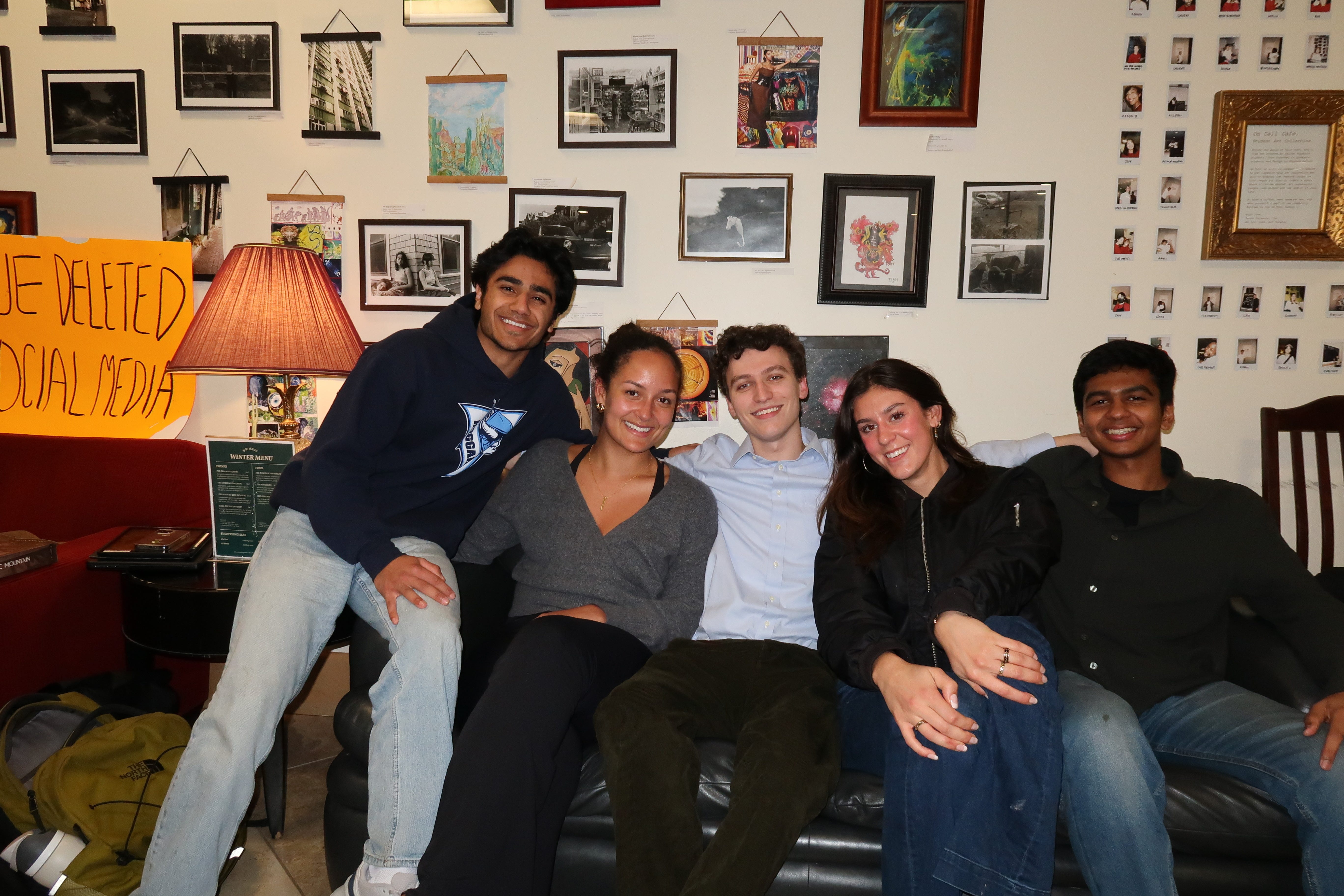
Reconnect Stanford is an organization that helps people delete social media. Having experienced the benefits of deleting social media in our own lives, we hope we can help others to do what they may be less likely to do on their own. The goal of this newsletter is to keep our members, friends, family, and anyone else who may be interested up to date on what we’re doing.
Even before we met, the group that started Reconnect Stanford had all been doing individually what we now do collectively as an organization. I deleted Instagram three years ago, when I got fed up with how much time I was wasting on an app that was not adding anything to my life. My first week at Stanford, I met Truitt Flink, who deleted social media when she decided she preferred to live life through her own eyes, in real time, as opposed to curating it later on her feed. As we set out to persuade our friends to make the same decision, Truitt and I met Aaditya Nalawade, Samin Bhan, Mahalia Morgan, and Jamie Holmstrom, all of whom had also deleted social media and were evangelizing a social-media-free lifestyle. Together, we founded Reconnect Stanford to coordinate our efforts, and in the past few months dozens of our peers have joined us by deleting social media.
Like many concerned about this issue, we take inspiration from Jonathan Haidt’s seminal book, The Anxious Generation, which describes the threats posed by social media and proposes ways in which parents, schools, and governments can respond. The publication of The Anxious Generation marked a turning point in the anti-social media movement. Haidt poured ice-cold water on the faces of the slumbering public, waking them up once and for all to the fact that social media is bad for kids.
However, Haidt’s book, and the movement he catalyzed, have focused primarily on minors, who can benefit from his proposals to ban phones in elementary, middle, and high schools and increase the minimum age for creating a social media account from 13 to 16. Unfortunately, my cohort is largely left out of the picture. I was born in 2002: I downloaded Instagram at 12, and I was 22 when The Anxious Generation was published. Thus, my generation is the forgotten generation: we were active on social media for most of our childhood, and legislative solutions like banning phones in schools won’t solve our problem.
Furthermore, in pushing for legislation, Haidt and others have made the case that childhood social media use causes irreparable harm. Indeed, there is plenty of evidence to suggest this is so (anyone unfamiliar with the social-psychological case against social media is encouraged to read The Anxious Generation). And it is undoubtedly important for parents, teachers, and legislators to recognize social media for what it is: a product intentionally designed to manipulate kids into spending as much time as possible staring at their phones.
But even if using social media when you’re young has real developmental effects, this does not mean that anyone who had social media in middle school is a lost cause. I downloaded Instagram in fifth grade, and used it for a decade before I deleted my account at 20. And while there are ways in which I believe the incalculable hours I spent on social media left me permanently scarred, my life isn’t so bad.
Social media is addictive, but it’s not heroin. Once you’re off it, you don’t miss it all that much. And insofar as the anxiety, depression, and ADHD endemic to my generation are symptoms of our compulsive social media use, these symptoms do not necessarily persist after deleting social media. The popular narrative that social media causes irreparable harm to children may be true, but it does not mean that millions of young adults who grew up with social media would not now be better off without it.
“Reconnect Stanford aims not only to help people delete social media but to make it socially acceptable not to have it in the first place.”
So it is not too late for the forgotten generation. It is not too late for us to delete social media and get to know each other as human beings in the real world. It is not too late for us to reclaim the hours of our days, weeks, and years that we would otherwise spend scrolling. Indeed, members of Reconnect Stanford are confirming this every day through our own experiences. But we must act now—this very minute—for every moment we spend on social media is a moment lost not just for ourselves, but for our generation.
In short, while we are excited about legislative efforts, we believe the ultimate solution for our generation, and for future generations, is not statutory but cultural. Therefore, Reconnect Stanford aims not only to help people delete social media, but to make it socially acceptable not to have it in the first place. Our ambition is to help start a nationwide movement, and we are encouraged to see other similar organizations popping up at universities across the country.
Only by living full lives without social media, and thereby proving that deleting social media is worthwhile, do we stand a chance of bringing our generation back from the zombie world of scrolling, and scrolling, and scrolling.
Founded in 2025, Reconnect Stanford is a Stanford student-led movement & non-profit dedicated to helping people step away from addictive platforms and toward meaningful connection, time, and attention. We build community around social media sobriety through stories, support for students who delete, peer-to-peer mentorship with middle and high schoolers, and events where peers disconnect together.
To learn more and support our cause, visit reconnectstanford.org. To submit a guest piece, email reconnectstanford@gmail.com
About the author: Ben Botvinick is the co-founder of Reconnect Stanford. Raised in Philadelphia, PA, he is a second-year history student at Stanford University. He deleted his social media accounts in 2025.